
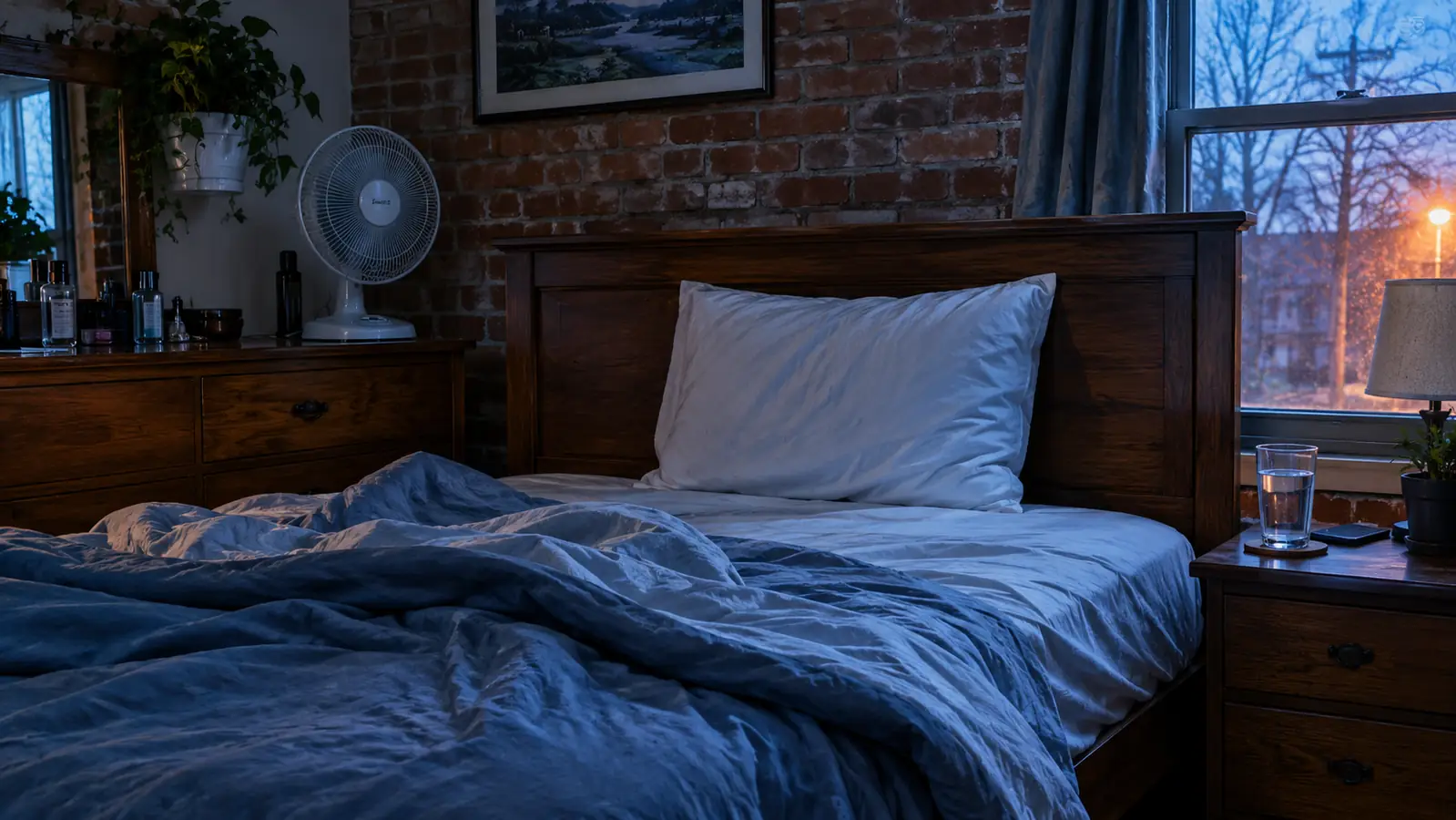
Three in the morning has its own sound in our house. The furnace ticks. A car goes past the window by my nightstand and the street lamp throws a stripe of light across the ceiling. And I am awake, flat on my back, with a pillow that was cool ten minutes ago and is now the temperature of my own head.
I spent about three years solving that hour the wrong way. I would lie there and negotiate with myself. Then, after a winter of bad nights that ran from December into February, I stopped negotiating and started working through the bedroom piece by piece. In the first week of March I bought five things with my own money, and one of them was a QUTOOL cooling pillow. I have slept on it every night since, roughly eight months now, on my side of a queen bed we have had for years. Here is the order I would do it in if I were starting again, and where the QUTOOL pillow honestly fits, which is later in the list than a pillow company would like.
The piece of my bed I notice most at three in the morning
The QUTOOL cooling pillow has one silky cool side and one soft side, and you take foam out by the handful until it sits at the height your neck actually wants. It is the part of my bedroom I would replace first if it went missing.
Amazon Check Today's Price on Amazon →Step 1: Take the heat out of the room, not just out of the pillow
Every cooling pillow works roughly the same way underneath the marketing. It moves heat away from your head faster than a regular pillow does, and then it stops, because the fabric has caught up with your body temperature. The QUTOOL listing is unusually straight about this in its own bullets, where it notes that all bedding fabrics are affected by the temperature of their surroundings. That sentence tells you the order of operations. If the bedroom is warm, a cooling pillow is a cold drink in a hot car.
Ours is an upstairs bedroom in a brick house outside Richmond, and upstairs rooms hold the day's heat like a jar holds water. Our thermostat goes to 67 at night, all year. Before March it was 70, and if you had told me three degrees could matter I would have laughed at you. It matters. That one change did more for my 3am waking than any product I bought, and it cost nothing.
Airflow is the second half. The ceiling fan runs on low all night, not enough to feel a draft, just enough that the air is not sitting still on top of us. In summer the window by my nightstand stays cracked an inch. I also keep a small fan on the dresser for the worst nights in July and August. Juniper, our old standard poodle, sleeps on her own bed at the foot of ours and she will get up and move to the cooler hallway on those nights, which tells you everything about how the room holds heat.

Step 2: Strip the bed back to layers you can remove in the dark
The most useful thing a hot sleeper can own is the ability to remove a layer at two in the morning without turning on a light. Our bed has a regular comforter that Dale and I share. On my half there is also a 15 pound weighted blanket, one person size, that I use on its own in summer and under the comforter in winter. Dale never touches it. That is the whole arrangement: one shared layer, one personal layer, and nobody has to negotiate at 3am.
Then look at what you actually sleep in. Cotton, loose, nothing with a waistband that digs. I wore a pair of heavy knit pajamas for years because they were warm getting into bed, which is exactly the wrong reason. Warm getting in means hot at three. The same goes for the sheets. We switched to plain cotton and stopped using a polyester blanket that trapped heat under it like a lid.
One more thing here, and it is the least glamorous: decide in advance which layer you will shed. If you have to think about it at 3am, you will lie there sweating and thinking instead. I know before I turn out the light that the comforter comes off first and the weighted blanket stays. That decision is already made, so the waking is shorter.
Step 3: Choose a pillow by how you sleep, and by whether you can change its height
Pillows get sold by firmness and bought by height, and those are not the same thing. A pillow that is too tall pushes your chin toward your chest. Too flat and your neck has nothing to rest on and your shoulder takes the load. I am a side sleeper who rolls onto her back around two in the morning, and for years I slept on a flat polyester pillow that a decade of my own head had flattened further. That pillow now lives in the guest room.
The QUTOOL cooling pillow is a standard size shredded memory foam pillow, 3.3 pounds, filled with 85 percent cross cut memory foam and 15 percent soft microfiber, and it is CertiPUR-US certified. Shredded fill is the reason it works for me. You unzip the inner cover and take foam out by the handful until the height is right, and you can put it back if you overshoot. I took a handful out in the first week because it sat too tall. I have not touched the fill since.
The cover is where the cooling lives. One side is a silky ice fabric, the other is a soft fabric, and the cool side goes up. The listing says the cooling side lowers surface temperature by roughly 4 to 9 degrees, and I believe the direction of that more than the exact number, because no pillow can stay colder than the room it sits in. What it does is feel genuinely cool against your cheek for the first stretch of the night. Then it warms up. Then you flip it. I would rather have a pillow that is honest about that than one that pretends otherwise.
Step 4: Set the pillow up properly in the first week
Two things about this pillow will decide your first week, and neither is in the marketing. The first is that the foam arrives compressed and needs to breathe. The listing says to let it air out for a day or two, and I did, on the guest room bed with the window cracked. It plumped up and the smell went away on its own.
The second is the fill. Unzip, take out one handful, zip it back, sleep on it one night, repeat if you need to. Do not pull out three handfuls at once and then decide you have ruined it. Mine is at the point where I can slide my hand under my neck and feel the pillow meet it without lifting my head off the bed. That is the test I use, and it took me about four nights to get there.
Care is easy but specific. The cover is polyester, 350 thread count, and it comes off and goes in the machine. It air dries, no heat, which matters because heat is what kills a cooling fabric. The shredded foam never goes in the washer, not ever. I wash the cover when it needs it and hang it over the stair rail to dry, and the pillow goes back together the same evening. The inner cover is a breathable smooth fabric and I leave it alone.
Step 5: Plan for the 3am wake-up instead of fighting it
I still wake up some nights. That is the honest part of this, and I am not going to dress it up. What changed is how long I stay awake. Before March it was an hour or more, most nights. Now it is usually once, and about twenty minutes, and some nights I go straight back under and never look at anything.
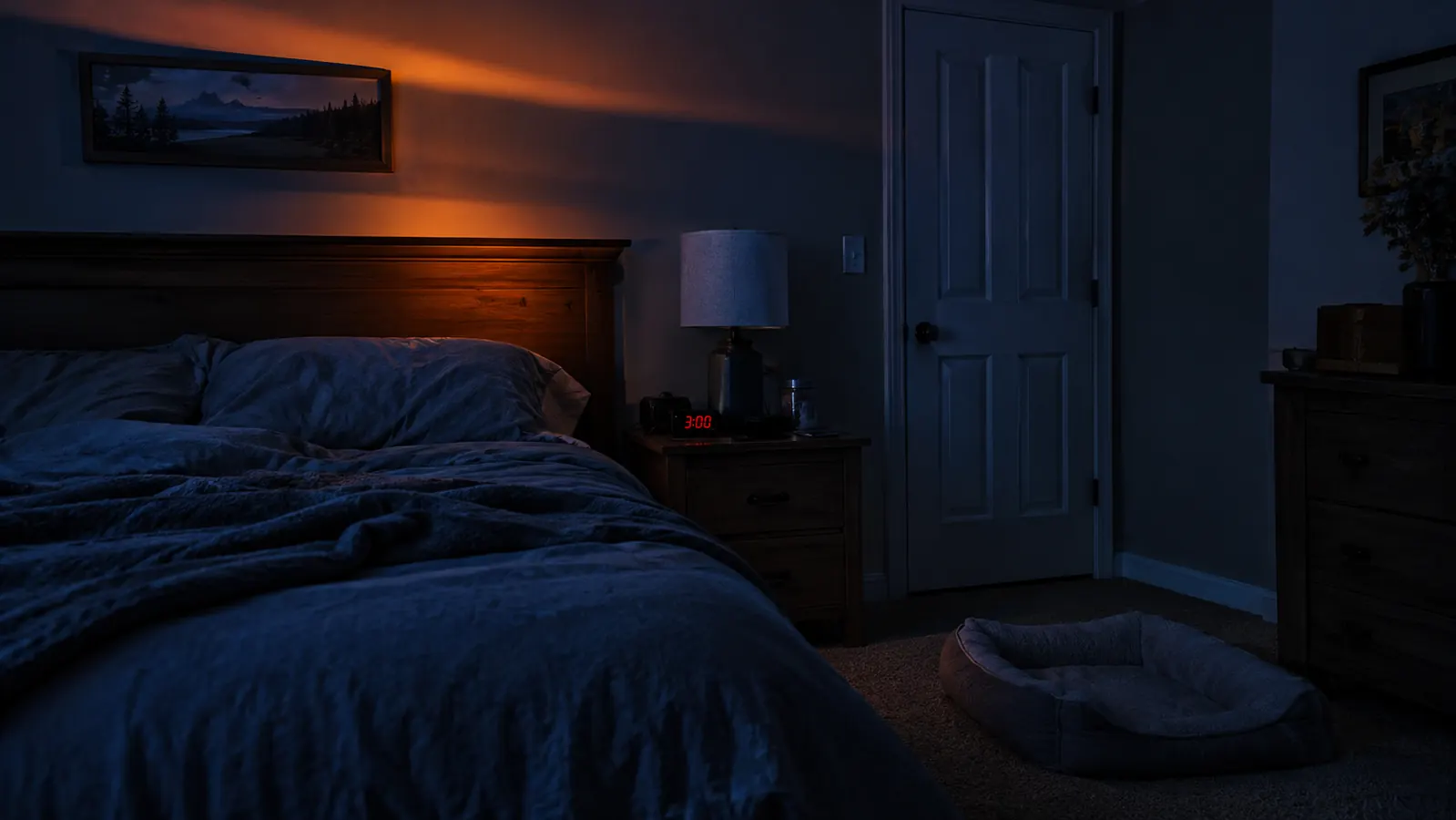
So have a plan ready before it happens. When I wake up warm, I flip the QUTOOL pillow to the cool side and put my cheek on it, and that small cold shock is enough to break the loop I used to get stuck in. I do not check the clock. My phone charges in the kitchen overnight, so there is nothing to reach for. The white noise machine is already running brown noise about a third of the way up, which covers Dale's light snoring and the occasional car. I take a sip of water and I do not turn on a light.
The instinct at 3am is to try harder, and trying harder is the thing that keeps you awake. I got that backwards for three years. Now I get up if twenty minutes have gone by and I am still wide, I sit in the dark living room for a bit with the dog, and I come back. It sounds like nothing. It works better than lying there doing arithmetic about how many hours are left.
What Else Helps
The QUTOOL pillow was one of five things I bought that first week of March, and I would be lying if I told you it was the one that changed the most. The mask came first, a contoured one with deep eye cups, because the street lamp outside my window was the biggest single problem and the mask fixed it inside a week. The white noise machine came second. The sunrise alarm clock came third, mostly so my phone could leave the bedroom. The weighted blanket came fourth. The pillow came fifth, and it is the one I notice every single night, because my head is on it for eight hours and there is no way around that.
A few things that cost nothing and helped anyway. A glass of water on the nightstand so you are not getting up and turning on a light. Pajamas you would not mind being seen in, because hot sleepers should dress for the temperature at 3am and not the temperature getting in. A dog bed in the right spot, since Juniper is nine and stiff some nights and her shifting around at the foot of our bed wakes me as surely as anything else. We moved her bed six inches further from mine and both of us sleep better for it.
And the thing I say to friends who ask: none of this is a cure. I still wake some nights. Juniper still moves around. Dale still snores, lightly, and the white noise handles most of it. If you are awake for hours most nights, or if the snoring in your house is loud and broken, that is a conversation for a doctor and not for a pillow. What I did was make the bedroom less hostile, one piece at a time, and the difference between a bad hour and a tolerable twenty minutes turned out to be worth all of it.
A pillow cannot stay colder than the room. It feels cool for the first stretch of the night, then it warms up, and then you flip it. That is the honest version.
The last thing I do before I turn out the light
Cool side up, one hand under the cover to check the height, and that is the whole ritual. Eight months in, the QUTOOL cooling pillow is the piece of my bed I would replace first if it ever went missing.
Amazon Check Today's Price on Amazon →