
Three years of waking at three in the morning taught me one thing about alarms that nobody mentions. The way you are woken matters. I would fall asleep fine, then lie there for an hour or more, and by the time 6:45 came around my phone would go off on the nightstand like a fire drill. I would come awake with my heart going and my shoulders already up around my ears.
That was the setup until the first week of March, when I bought five things with my own money and changed the bedroom instead of reaching for something stronger. One of the five was a JALL sunrise alarm clock. The phone now charges in the kitchen overnight.
So here is the short answer. If the goal is to be woken by light instead of a jolt, and to get the phone out of the bedroom, the JALL wins and it is not close. If the goal is flexibility, travel and a device you already know how to work, the phone alarm wins. Most of us need the first answer and keep the second for airports.
| JALL Sunrise Alarm Clock | Phone Alarm | |
|---|---|---|
| How it wakes you | A full-screen light brightens before the alarm, then a nature sound finishes the job. | Sound only, at whatever volume the phone was left at. |
| Light in the room | 17 light modes, from dim enough to read by to bright enough to fill the screen. | No dawn light at all. The screen wakes up only if you touch it. |
| Night noise | 25 built-in nature sounds with a sleep timer you can set from 10 to 480 minutes. | Needs an app, and the phone has to stay in the room. |
| Snooze | You choose the length, anywhere from 5 to 20 minutes. | Whatever the phone offers, usually a short fixed window. |
| A one-off schedule change | Dual alarms cover weekday and weekend, but a single Tuesday change takes a few button presses. | Add it, name it, delete it. Half a minute. |
| Travel | Corded, 1.2 pounds, and happier on a nightstand than in a suitcase. | Already in your pocket. |
| First-week effort | A few evenings with the manual to set the time, the alarms, the light and the sound. | You have been using it for years. |
| Power | Plugs in by USB and takes one AA battery, so it is never running on a charge. | Needs charging, and a dead phone means no alarm. |
| What it keeps out of reach | Nothing to scroll at three in the morning. | A screen with your whole day on it, an arm's length away. |
| Best for | Waking to light instead of a jolt, and keeping the phone out of the bedroom. | People who travel often or change their alarm daily. |
Where JALL Wins
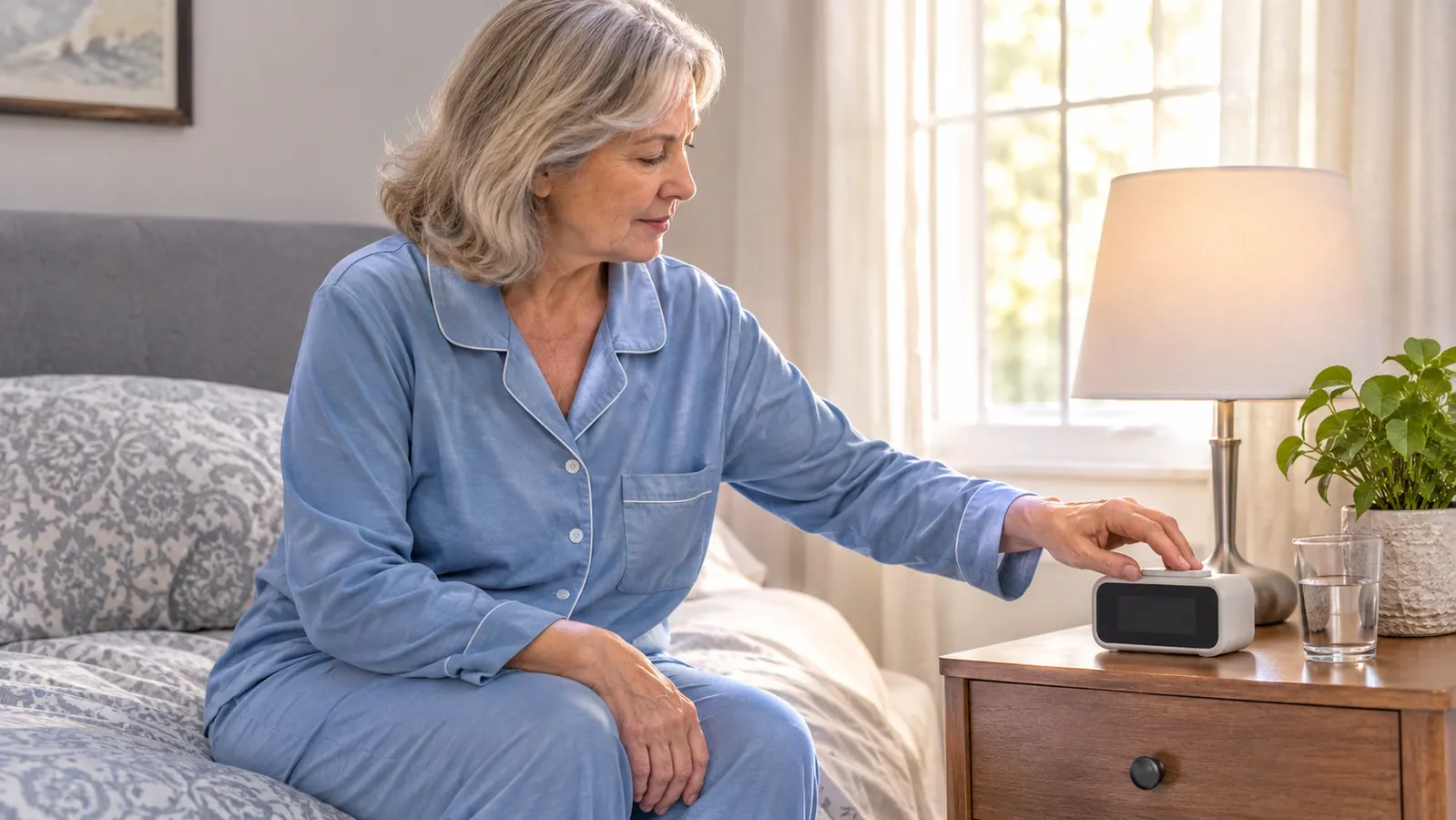
Start with the waking itself, because that is the whole point. The JALL has a full-screen sunrise light that brightens before the alarm time, and then a sound alarm finishes the job. Mine is set for 6:45 on weekdays, with a birdsong from the built-in nature sounds at the end. By the time the sound arrives, the room has already changed. A dark room and a sudden noise is a different experience entirely, and my body knows the difference even when my brain is still half gone.
I have to be honest about one detail, because it decides whether this works for you. I wear a contoured sleep mask, and I have since the same week in March. The street lamp outside my window was my biggest problem, and the mask solved it. On many mornings the mask blocks the dawn glow, and what actually gets me up is the birdsong. On the mornings I have already pushed the mask up onto my forehead in the night, the light does the work, and those are the mornings I get out of bed without arguing with myself.
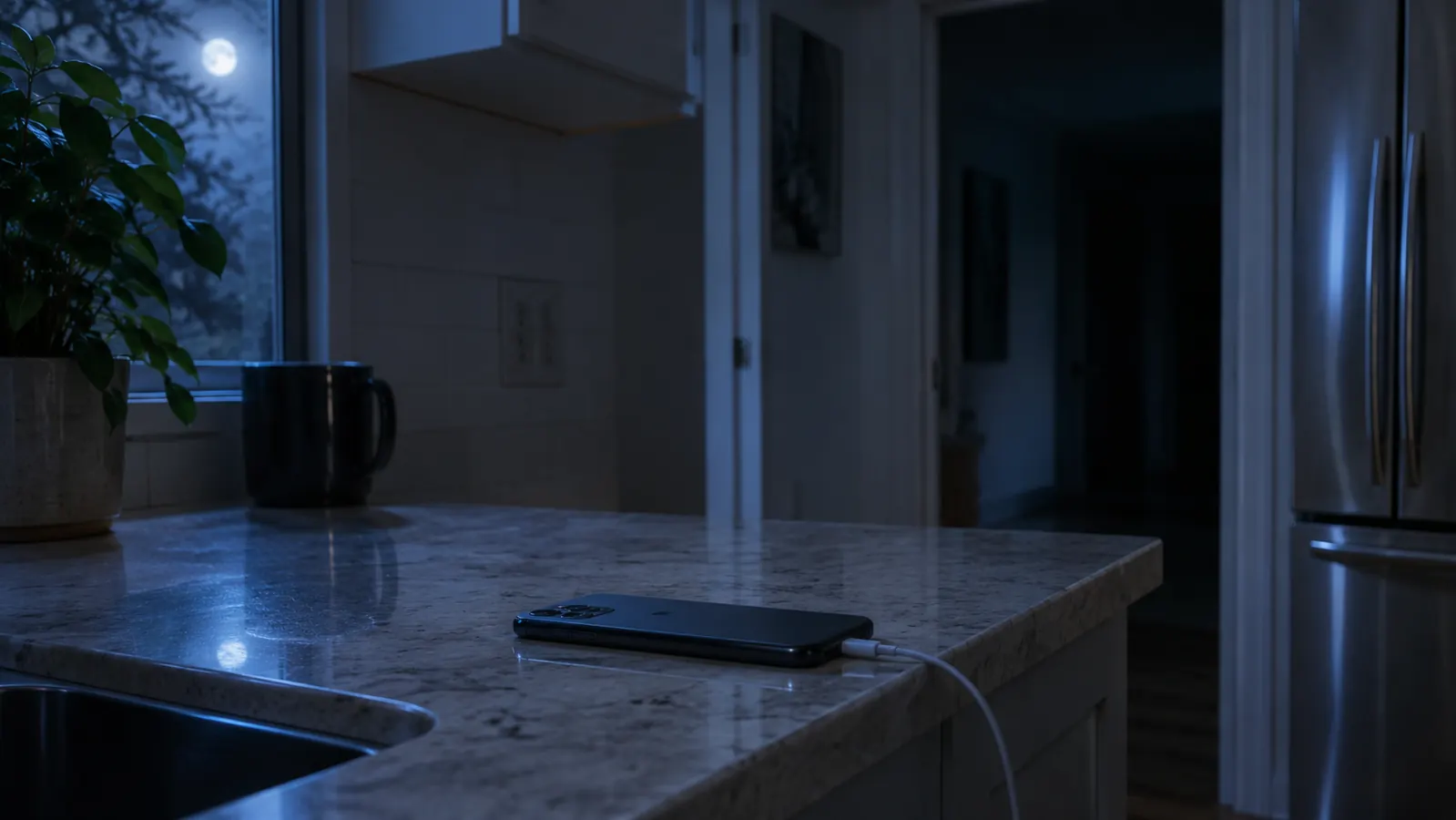
The second win is the nightstand. A phone beside the bed is a screen within reach, and at three in the morning a screen within reach is a bad idea. Now the phone charges in the kitchen. The only things within arm's reach are the clock, the noise machine and the mask. That one decision did more for my 3am hour than any single product I bought.
The third win is that it is one device doing two jobs. The JALL holds 25 nature sounds and runs a sleep timer you can set anywhere from 10 to 480 minutes. I do not use its sounds at night, because my Magicteam noise machine already handles that, and I would rather not pretend otherwise. But if you want one thing on the nightstand instead of two, the clock can play steady noise or nature sounds and shut itself off on a timer.
It also does something at bedtime, which I did not expect to care about. Among the 17 light modes there are settings dim enough to read by, so the last twenty minutes before I turn over are lit by the clock instead of the ceiling fixture. I read paper books. A low light on the nightstand means I am not squinting and I am not scrolling. Small thing, turned into a habit.
The dual alarms are worth a word too. Mine runs a weekday alarm at 6:45 and a later one on weekends, and switching between the two is a matter of which alarm is switched on rather than resetting anything. If your week has a fixed shape, that covers it.
And it is a plug-in device, not something you have to remember to charge. It runs on USB power, takes one AA battery, measures 12.4 by 10.2 by 3.2 inches, weighs 1.2 pounds and sits on the tabletop. In eight months mine has not moved and has not needed to be reset. There is an FM radio built in as well, which I have never once turned on, so I will not pretend to have an opinion about it.
Where the Phone Alarm Wins
I am not going to pretend the phone is the villain in every story. The phone wins on the thing that matters most in the first week: you already know how to use it. There is no manual and no learning curve. The JALL took me a few evenings with the instructions to set the time, the two alarms, the light mode I wanted and the sound I wanted. That is not difficult, but it is real effort, and some people will not do it.
The phone also wins on flexibility. A dentist appointment on a Tuesday, a repairman coming at seven, an early flight: on a phone you add the alarm, name it, and delete it when the day is over. The JALL has dual alarms that cover a weekday routine and a weekend routine well, but a single midweek change takes a few more button presses. Travel is the same story. The clock is corded, 1.2 pounds, and happier on a nightstand than in a suitcase. The phone is already in your pocket.
Snooze is a genuine tie. The JALL lets you choose the snooze length, anywhere from 5 to 20 minutes, which is more generous than most phones. But a phone snooze works fine, and nobody should buy a clock for that reason alone. One more honest point: if you share a bed with someone who gets up at a different time, a phone on silent with the screen face down wakes one person quietly. A light that fills the room does not.
And the phone does things the clock simply does not. Weather, the calendar, a message from my daughter, a timer for the oven. Some mornings that is genuinely useful, and a sunrise clock is not going to tell you it is going to rain. I moved the phone to the kitchen and I still check it over coffee, just not at three in the morning.
If the 6:45 jolt is the part you dread, this is the swap
The JALL does the one thing a phone cannot: it lights the room before it makes a sound. Set one alarm for weekdays and one for weekends, choose a light mode and a nature sound, and leave the phone charging in the kitchen.
Amazon Check Today's Price on Amazon →What Eight Months of Mornings Actually Looked Like
The first week was fiddly. There are 17 light modes and 25 sounds to sort through, and I tried far too many of them before I settled. What I landed on was the dimmest setting for the sunrise, so the light comes up gradually instead of snapping on, and the birdsong for the final sound. I have not changed either since March.
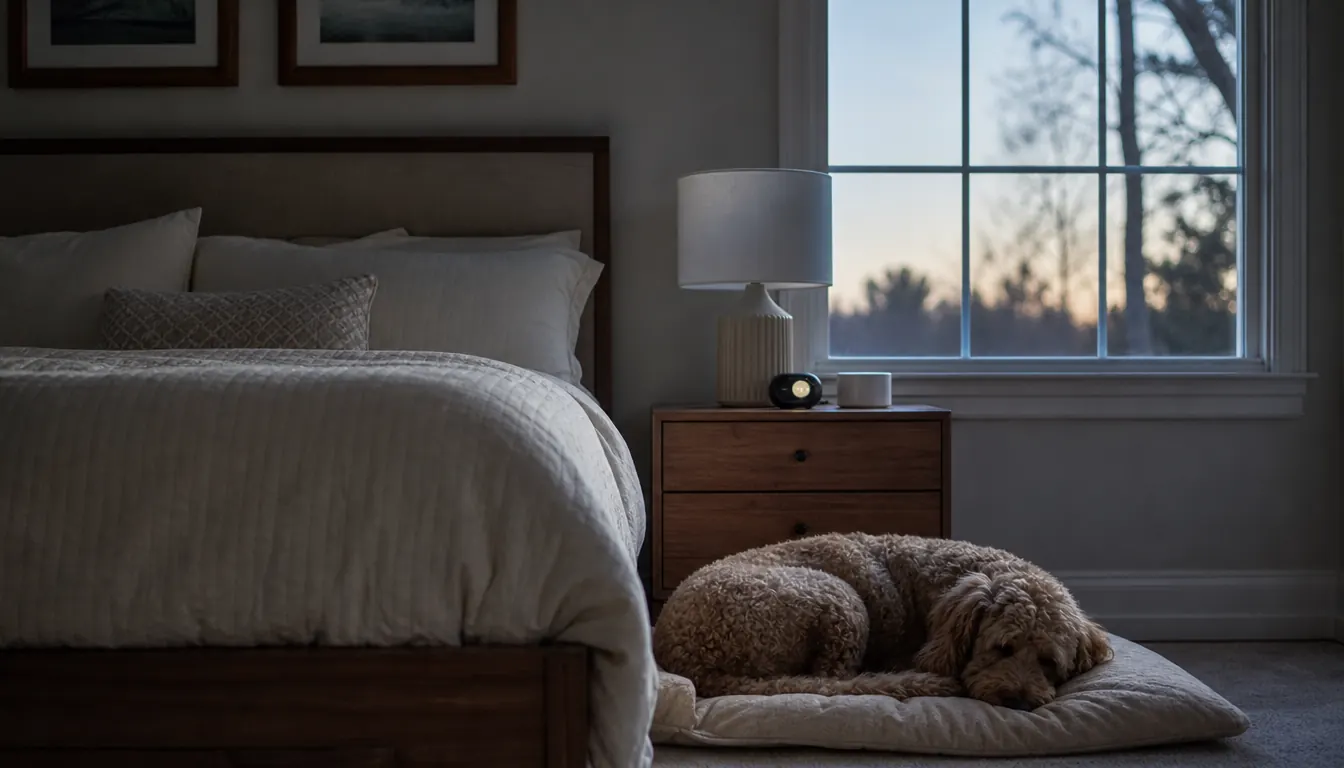
The result is honest and unspectacular. I still wake some nights. Most weeks it is once, and I am back asleep in about twenty minutes instead of an hour. Juniper still shifts around on her bed at the foot of ours, and Dale still snores lightly until the noise machine covers it. The clock did not fix my sleep. It fixed my mornings, which turned out to be the part I could actually control.
The clock did not fix my sleep. It fixed my mornings, and my phone stopped being the last thing I touched at night and the first thing I touched at dawn.
Dale says the light does not bother him, and he is usually up before me anyway. Juniper has no opinion, though she has learned that the birdsong means I am about to come downstairs. The thing I notice most is that I no longer start the day already behind, braced for a noise.
The Setup That Made It Work
A clock on its own would not have done much. What changed the bedroom was the whole arrangement, and the clock is one piece of it. Here is how the nightstand ended up.
The clock sits on the right side, next to the window that faces the street lamp. The noise machine is beside it, set to a steady sound about a third of the way up the volume, running all night with the timer off. The mask lives on the corner of the nightstand. The phone charges in the kitchen, face down on the counter, and I do not bring it upstairs.
The rest is boring and it matters. The thermostat is set to 67 at night. There is no television in the bedroom. The comforter is shared and my weighted blanket goes on my half only, over me. Dale has his side the way he likes it, and the old box fan lives in the garage now, coming out in summer for airflow and nothing else.
If you are starting from scratch, do the clock and the phone decision first, because those two require nothing but a choice and I noticed them in the first week. The rest I added over a month, one thing at a time.
Who Should Buy Which
Buy the JALL if your phone currently charges beside your head, if you want light before sound, if you are a heavy sleeper who needs more than one thing working on you in the morning, or if you would like one device for wake-up light and steady noise. Buy it if you are willing to spend an evening with the manual and a week adjusting. That is the honest trade: an evening of setup and a week of getting used to it.
Keep the phone alarm if you travel most weeks, if your schedule changes day to day, or if you share a bed with someone on a very different timetable and the light would wake them. Keep it too if you are not willing to move the phone out of the bedroom, because if the phone stays on the nightstand you get half the benefit and all of the temptation.
One more thing, and I mean it plainly. If you are waking at three most nights for months on end, or if your partner's snoring is loud enough to hear through a wall, a clock is not the answer and neither is a mask. Talk to a doctor. What I did helped the room and the routine. It did not treat anything.
The part you can change tonight
Plug it in, pick a light mode, set two alarms, and move the phone to the kitchen before you go upstairs. The light does the rest of the work while you are still asleep.
Amazon Check Today's Price on Amazon →