
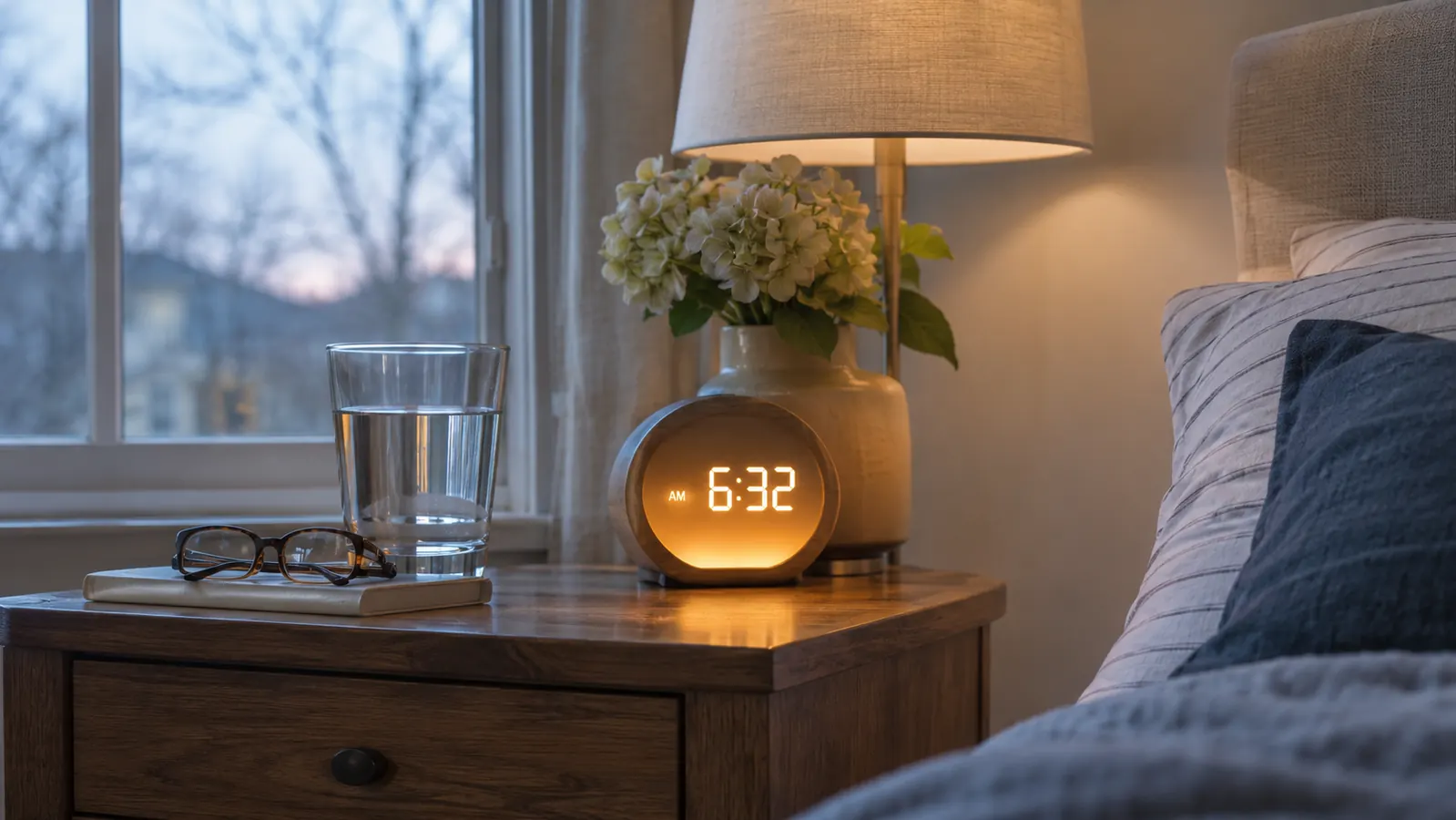
I woke at 3 a.m. for three years. Not every night, but enough nights that I stopped thinking of sleep as rest and started thinking of it as a shift I kept getting called in for. I would fall asleep fine and then lie there for an hour or more, listening to the street lamp hum through the window and to Dale's light snoring on the left side of the bed. Juniper, our apricot standard poodle, shifts on her own bed at the foot of ours some nights, and I hear that too.
The alarm was the last straw. My phone sat on the nightstand and went off at 6:45 with a sound like a smoke detector, and I would come up out of sleep with my heart going. That is not waking up. That is being startled awake, and I spent the first hour of most days feeling like I had been in a small accident. In the first week of March I moved the phone to the kitchen and put a JALL Sunrise Alarm Clock on the nightstand instead. I have used it every night since, about eight months now, and this is where I would start if you asked me how to wake up gently.
Gentle does not mean vague. A soft alarm that still jolts you is just a quieter jolt. What changed my mornings was the half hour before the sound, and that half hour is a setting, not a feature you unwrap.
The jolt is the problem, not the hour
The JALL Sunrise Alarm Clock builds its light for the half hour before the sound arrives, so you are already coming up out of sleep when the birdsong plays. It did not fix my nights. It fixed the way my mornings start.
Amazon Check Today's Price on Amazon →Step 1: Set the light to start long before you need to be upright
The whole trick of a sunrise clock is that the waking starts before the alarm does. Mine is set for 6:45 on weekday mornings and the light begins building about 30 minutes earlier, while I am still properly asleep. By the time the sound arrives I have been in light for half an hour, and my body has had a chance to come up out of sleep on its own instead of being yanked.
Most people get this backwards. They set the alarm for the exact minute they need to leave the bed and then wonder why the light did nothing. If the sunrise starts at the same moment the birdsong plays, you have bought yourself a lamp. Move the start time, not the alarm time. Give the light 30 minutes and keep the wake-up time fixed even on the days you slept badly, because the fixed time is doing half the work.
I got it wrong that first week, as it happens. I set the thing up on a Tuesday, set the alarm for 6:45, and lay in bed the next morning waiting to be gently awakened. What I got was the birdsong at 6:45 and a lamp that had been glowing quietly for half an hour at a pillow I could not see past my mask. It took me until the Thursday to understand that the light was not late. I was. Once I started lifting the mask when I first stirred, the last ten minutes before the sound did more for me than two years of hitting snooze on a phone.
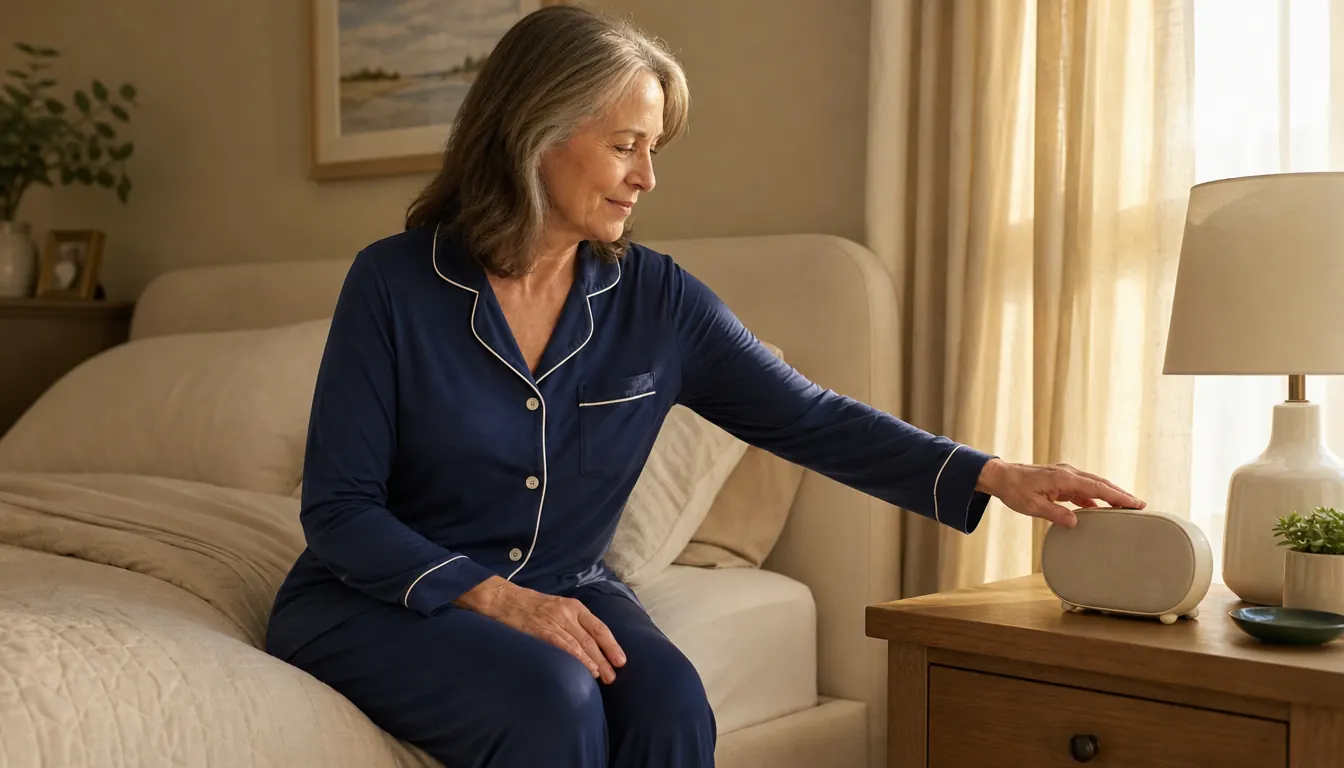
Physically it asks very little of you. The JALL sits on my nightstand about an arm's length from the pillow, plugged in by USB, and it takes up less space than the paperback I keep meaning to finish. It weighs a bit over a pound. Nothing about it needs to be found and fumbled for in the dark.
Step 2: Pick an ending sound you would not mind hearing
There are 25 nature sounds and white noises built into the clock, and the one you choose matters more than you would think, because it is the last thing your brain hears before the day starts. I use a soft birdsong. Not a rooster, not a chime that goes off like a doorbell. Birds. It is the gentlest of the lot and it does not startle me the way a beep does.
One practical thing: test it in daylight, in the afternoon, with the room bright. Set the alarm for two minutes out and stand across the room and listen. Do that once and you will know whether the sound you picked is one you can wake to without your heart rate jumping. I went through three or four of them before I settled. The clock also has an FM radio built in and I have never used it for waking, because I want the birds.
I did my sound test on a Saturday afternoon in March with a cup of tea going cold on the nightstand, cycling through them with the manual open on my knees. The rain sounds were too flat to register and the chimes made me flinch, which told me something useful. If a sound makes you flinch at two in the afternoon in a bright room, it will do worse at a quarter to seven in the dark. The birdsong was the only one I could listen to without bracing.
You can also use those same sounds at bedtime with a sleep timer that runs from 10 to 480 minutes. I do not, and I will tell you why in a moment, but if you want one device doing both jobs it is there.
Step 3: Decide now what happens on the mornings your eye mask is still on
Here is the part no listing will tell you. I wear a contoured memory foam sleep mask, and I wear it because the street lamp outside my window was waking me at 3 a.m. for years. The mask works. It also blocks the sunrise, which means that on plenty of mornings the light on the JALL is doing its work behind a closed door and the birdsong is what actually gets me up. I am not going to pretend otherwise.
So I built a small habit around it. When I first stir, somewhere in that last half hour, I push the mask up onto my forehead and let the last stretch of light land on my face. Those mornings are noticeably easier than the ones where I sleep straight through to the sound. Not a different life. A softer entry.
There was a morning in April that made the whole thing click. I woke on my own at maybe 6:20, pushed the mask up, and lay there watching the light on the ceiling get stronger by degrees. Juniper was asleep on her bed. Dale was still snoring on his side. Nothing happened, is my point. No jolt, no radio, no sitting bolt upright with a hand on my chest. The birdsong came at 6:45 and by then I had been half awake for twenty minutes and did not need it, which is the whole point of the exercise.
If you wear a mask, plan for this rather than being disappointed by it. The mask handles the night problem, the light handles the morning problem, and you give yourself permission to lift the mask when the glow starts. If you do not wear a mask, none of this applies to you and you will get the full effect from the first morning.
The mask got me through the night. The light made the morning something I could walk into instead of something that hit me.
Step 4: Fix the room before you blame the clock
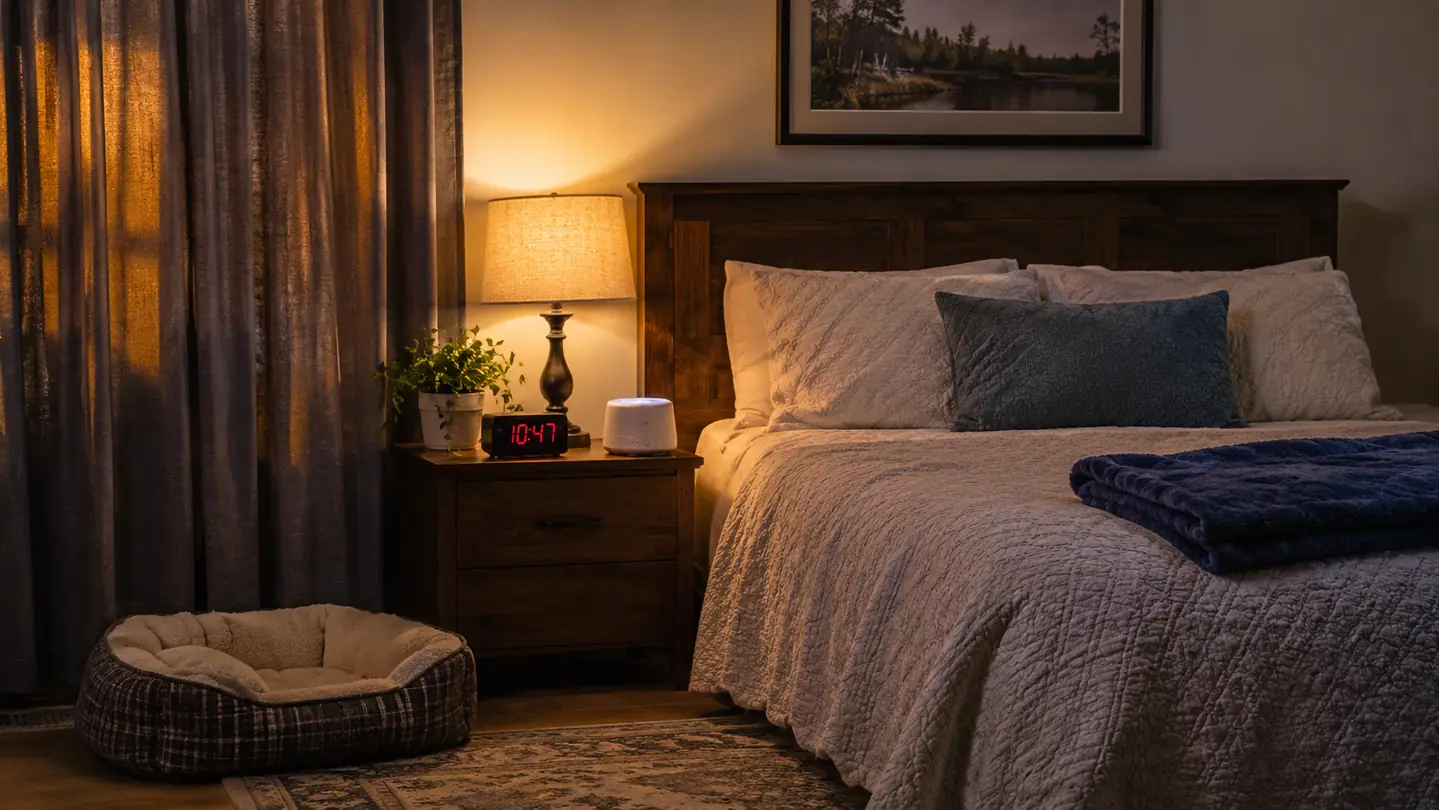
A sunrise alarm only works if it is the brightest thing happening. For two years my bedroom had a street lamp outside the window doing a slow flicker through the blinds all night, and the dawn light had competition long before 6 a.m. I fixed the window first. Heavier curtains, closed properly, no gap at the top. That single change was worth more than any device.
The rest of the room matters too. The thermostat is set to 67 at night, which sounds cold until you have slept in a warm bedroom in July and woken at 3 a.m. every night for a week. Dale's snoring is covered by a white noise machine on the same nightstand, running brown noise all night at about a third of the way up the volume. I still use the cooling pillow and the weighted blanket. None of that is about the alarm, and all of it is about whether the alarm has a chance.
Keep the nightstand boring. Mine holds the clock, the white noise machine, a glass of water and my glasses. That is the whole list. The phone charges in the kitchen now and has since March.
Step 5: Set the weekday and weekend alarms separately, and pick a snooze you can live with
The JALL takes two alarms and you can set each one to Everyday, Weekday or Weekend. That sounds like a small thing until you have spent years resetting one alarm every Friday night and forgetting to set it back on Sunday. I have one alarm on the Weekday setting at 6:45 and the second one waiting for weekends, and I have not touched the buttons in months.
The snooze is adjustable from 5 to 20 minutes, which is more choice than I need. I set mine to seven. Long enough that I am not slapping at the thing, short enough that I cannot talk myself into a third one. If you are someone who snoozes for 40 minutes, set it to 20 and accept that you are choosing to lose those 20 minutes on purpose.
The buttons took about a week to learn and I have not opened the manual since. There is a small LED display showing the time, and I turn the clock a little away from the bed at night so I am not doing arithmetic at 3 a.m. about how many hours are left before the birds. That is not a feature of the clock. That is a rule I made for myself, and honestly it has been harder to keep than any of the settings. It takes one AA battery, which I put in the first night, and I have not thought about it since.
The last piece is the phone. Mine lives in the kitchen overnight now. If your phone is still on the nightstand, your sunrise alarm is competing with a device built to be more interesting than sleep, and it will lose.
What Else Helps
The clock is one piece. If your nights are the real problem, it will not fix them. My 3 a.m. wake-ups came from light and noise and a warm room, and the things that helped most were dull. A contoured sleep mask for the street lamp. A white noise machine for the snoring and the occasional car. A cooler room. A pillow I could actually get comfortable on.
I would also say this plainly: I still wake some nights. Usually once, and I am back asleep in about 20 minutes instead of the hour or more it used to take. That is the honest number. It is a real improvement and it is not a cure, and I would not trust a page that told you otherwise. Juniper still shifts around on her bed some nights, and I still hear her.
The 17 light modes are a pleasant extra and I have used maybe three of them for reading in bed before lights out. They are not the reason to buy the thing. The reason is the sunrise and the sound at the end of it. My wind-down is the same every night and it starts at nine: lamp off, mask on, brown noise running, blanket over my half of the bed only. The clock is the last thing I set and the first thing I ignore until morning.
And if you are waking most nights, or if your partner has told you that you stop breathing or snore heavily, that is a conversation for a doctor and not a shopping decision. A sunrise alarm is a gentler morning. It is not a treatment for insomnia and it is not a fix for sleep apnea.
A morning that starts at 6:15 instead of 6:45
The JALL Sunrise Alarm Clock gives you the half hour before the alarm, which is the part that actually changes how the waking feels. Mine has been on the nightstand since the first week of March.
Amazon Check Today's Price on Amazon →